







Understand the problem
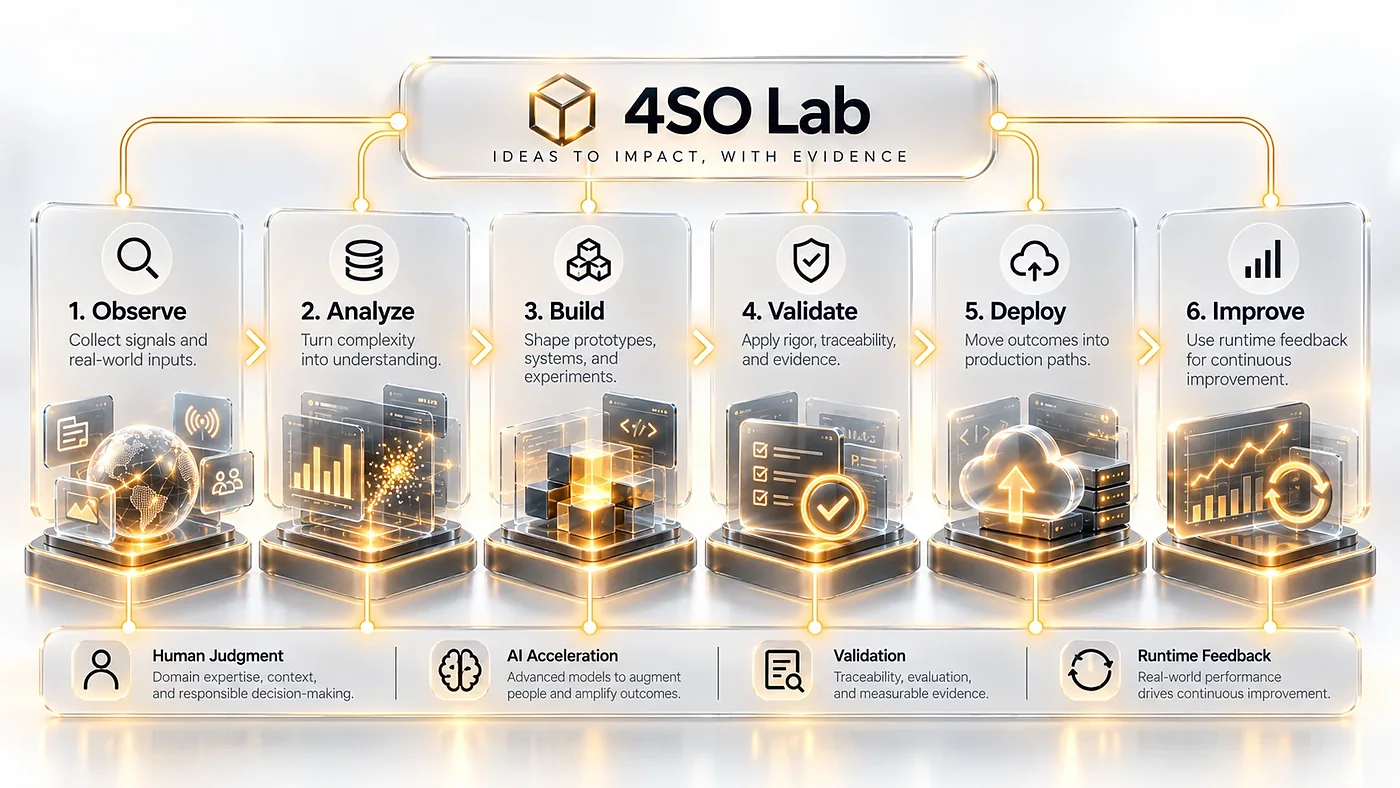
Observed system behavior, operator need, constraints and failure modes are examined before implementation begins.
 4SO Lab
The shared method for researching, designing, building and verifying every product; not a product itself.
How 4SO Lab works →All products →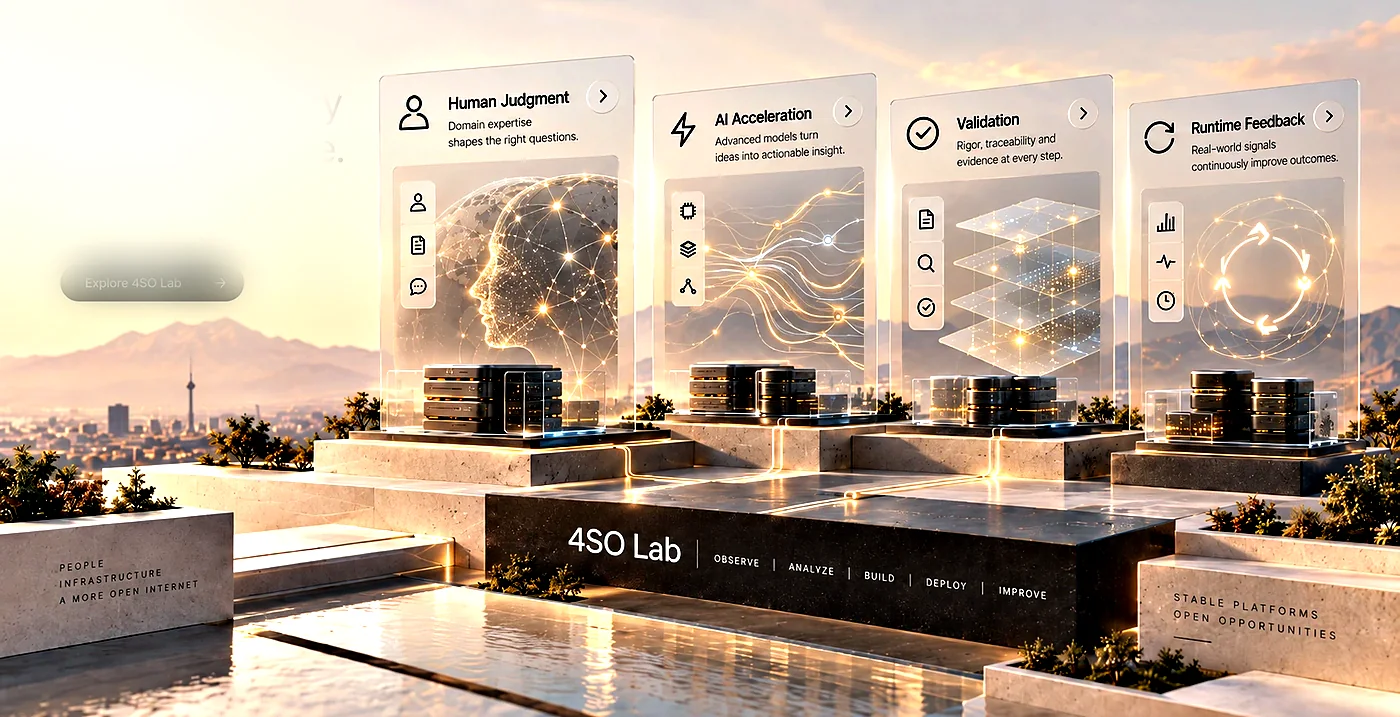
4SO LAB · PRODUCT ENGINEERING
4SO Lab is the product-engineering method behind 4SO: human experience frames the problem, automation and AI accelerate analysis and implementation, and independent verification decides what can actually be trusted.
Method
The baseline path remains repeatable and testable. AI enters only where it creates real leverage for analysis, solution exploration or implementation, and its output is still checked independently.
Observed system behavior, operator need, constraints and failure modes are examined before implementation begins.
State ownership, transitions, operator experience and safety boundaries are made explicit before mutation exists.
Agents and AI may accelerate implementation, but they do not operate outside product-owned interfaces and constraints.
Repeatable tests, negative controls and runtime read-back decide whether the result is actually correct.
Failures and observations return to the design so root causes are corrected rather than hidden behind a green status.
Evidence layers
Correct source, a successful install, expected behavior under failure and real runtime behavior are four different questions. Each needs evidence from the corresponding layer.
Interfaces, state models, invariants and ownership boundaries are checked at source/contract level.
The product artifact is built, installed in an independent environment and the installed result is inspected again.
Service loss, retry, interruption and recovery paths are exercised under conditions close to real operations.
Where behavior depends on infrastructure, the same product artifact is run and observed on the real target environment.

AI boundary
How AI is used varies by product, but one rule is fixed: a model must not create shadow state authority, hidden approval or a mutation path outside the Product API and product policy boundary.
The model receives the information needed for the task, not unrelated operational or sensitive context.
If a deterministic path can be tested and operated reliably, AI must not become a permanent dependency for correctness.
AI does not replace authorization, human approval or owner workflows with direct Shell, SQL or runtime access.
A proposed change is not trusted until tests and authoritative runtime read-back confirm its result.
Final objective
Operators should understand what changes, its impact, what blocks execution and where the result was verified. AI is useful when it makes that path clearer and faster.
That is the role of 4SO Lab across the product family.